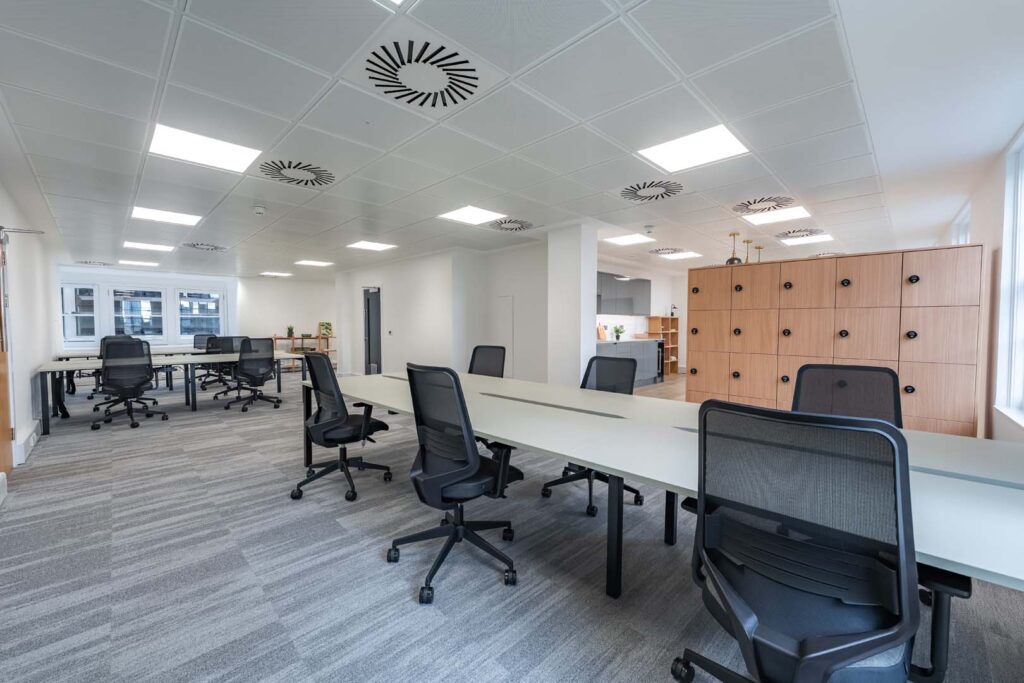


In today’s hybrid-work era, many businesses are tightening their footprints and looking to make every square meter count. When your office is compact, smart design isn’t a luxury; it’s a necessity.
The team at Imperial are well-versed in providing full-service tenant & landlord design and build office fit-outs and refurbishment delivery in London and beyond.
Here’s how you can transform a small office into a high-functioning, well-designed workspace.
Start with Clear Goals and Staff Needs
Before you select furniture or colour schemes, ask:
- What do we need this space to do?
- How many people will use it, and how often?
- What kind of work do they do (focused solo tasks, collaboration, client meetings)?
- Are there hybrid-working patterns or people coming in only part-time?
- What storage, technology, and meeting-space needs do you have?
Working with a fit-out specialist like Imperial means you can plan the workspace and layout based on both how you currently work, and how you expect to work in the future as your business changes shape.
Make Lighting and Visual Openness a Priority
Light and openness are key to making a small office feel larger and more welcoming.
- Maximise natural light: Position desks near windows; use glass partitions rather than solid walls.
- Use bright, well-distributed lighting and avoid dark corners.
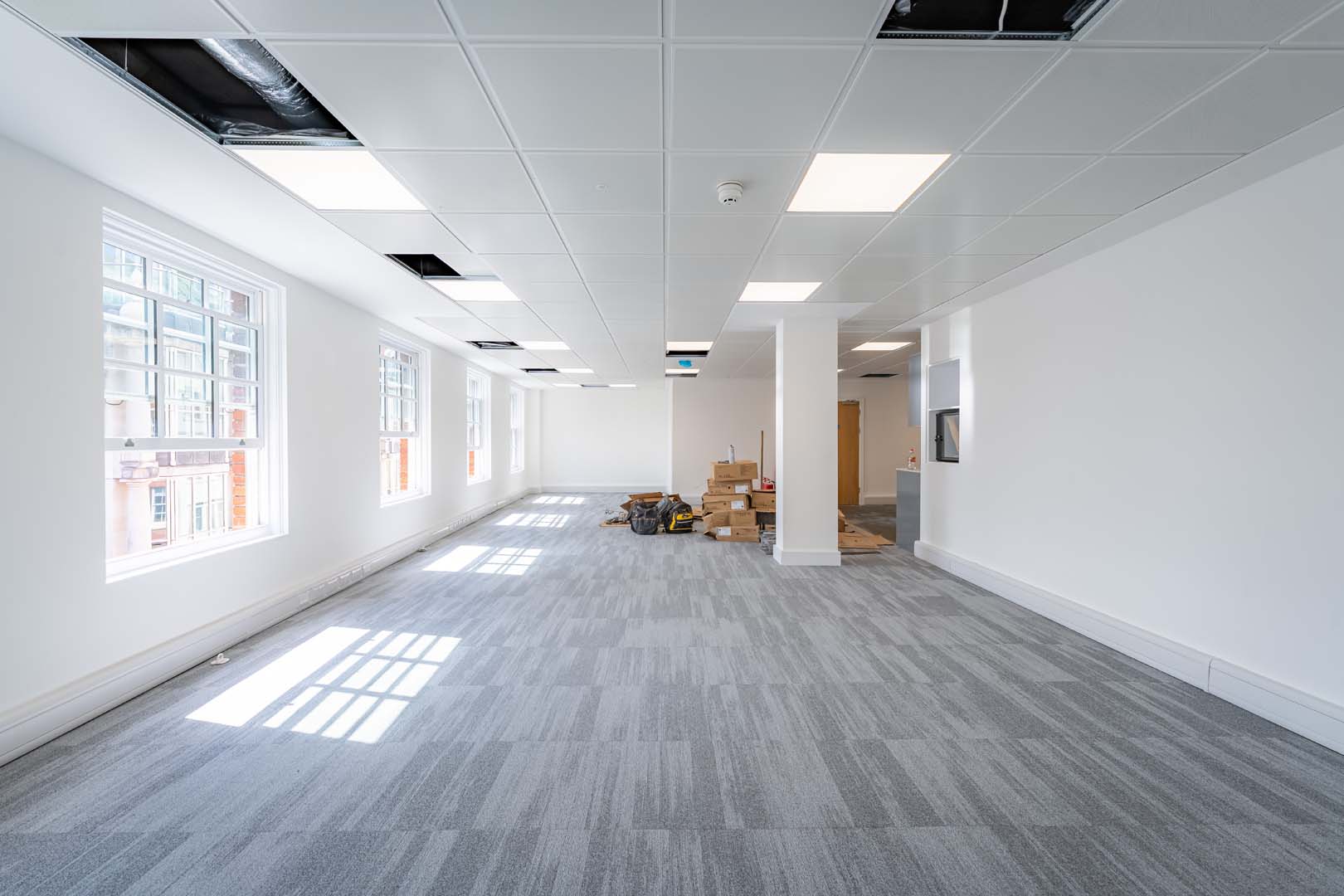
- Use lighter finishes on walls, floors, and large furniture to reflect light and open up your space.
- Consider open sightlines, avoid bulky partitions that block view and light flow.
Use Smart Zoning and Multipurpose Layouts
In small spaces, you can’t afford to dedicate separate rooms for each function. Instead:
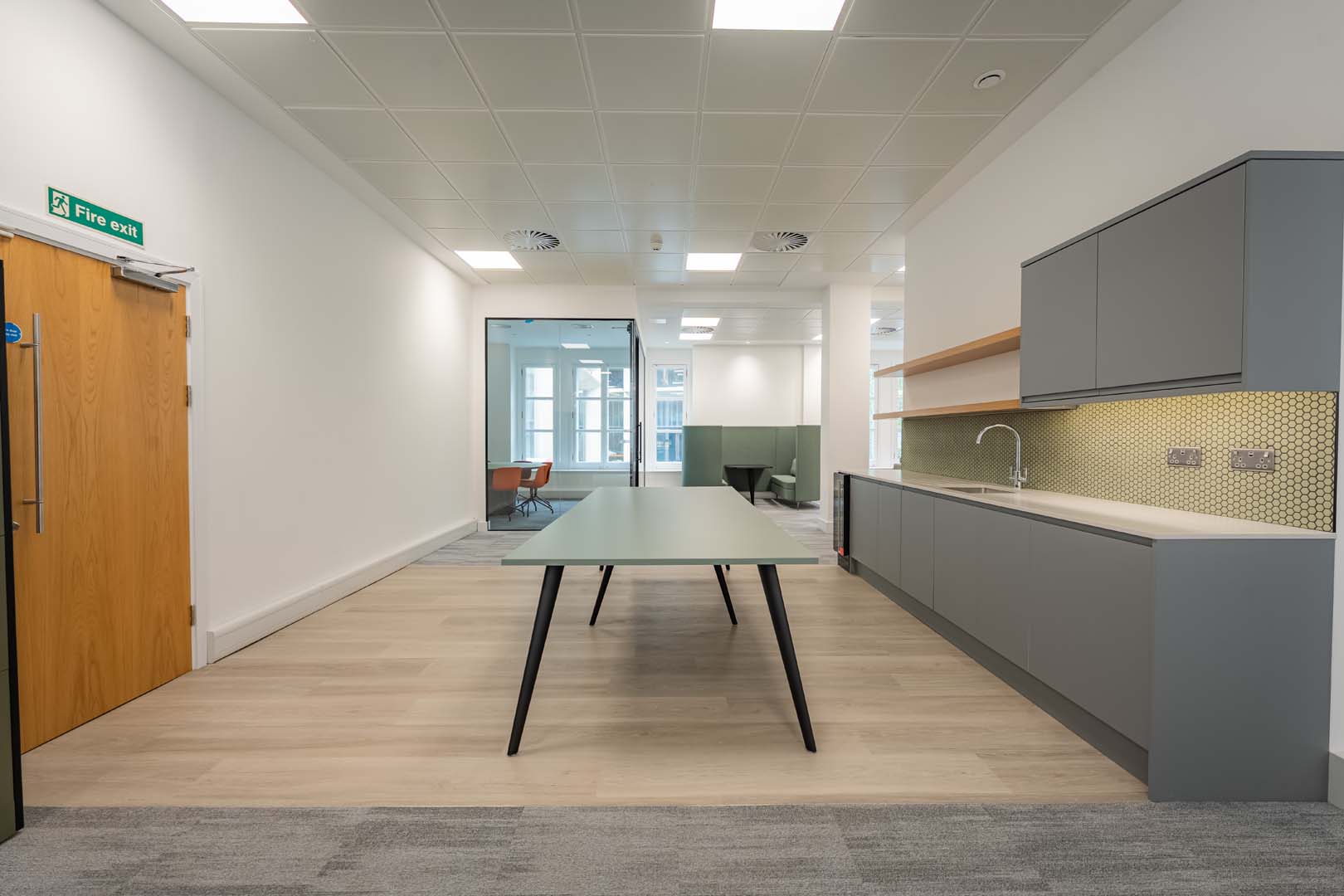
- Consider zones rather than enclosed rooms. This aligns with activity-based design.
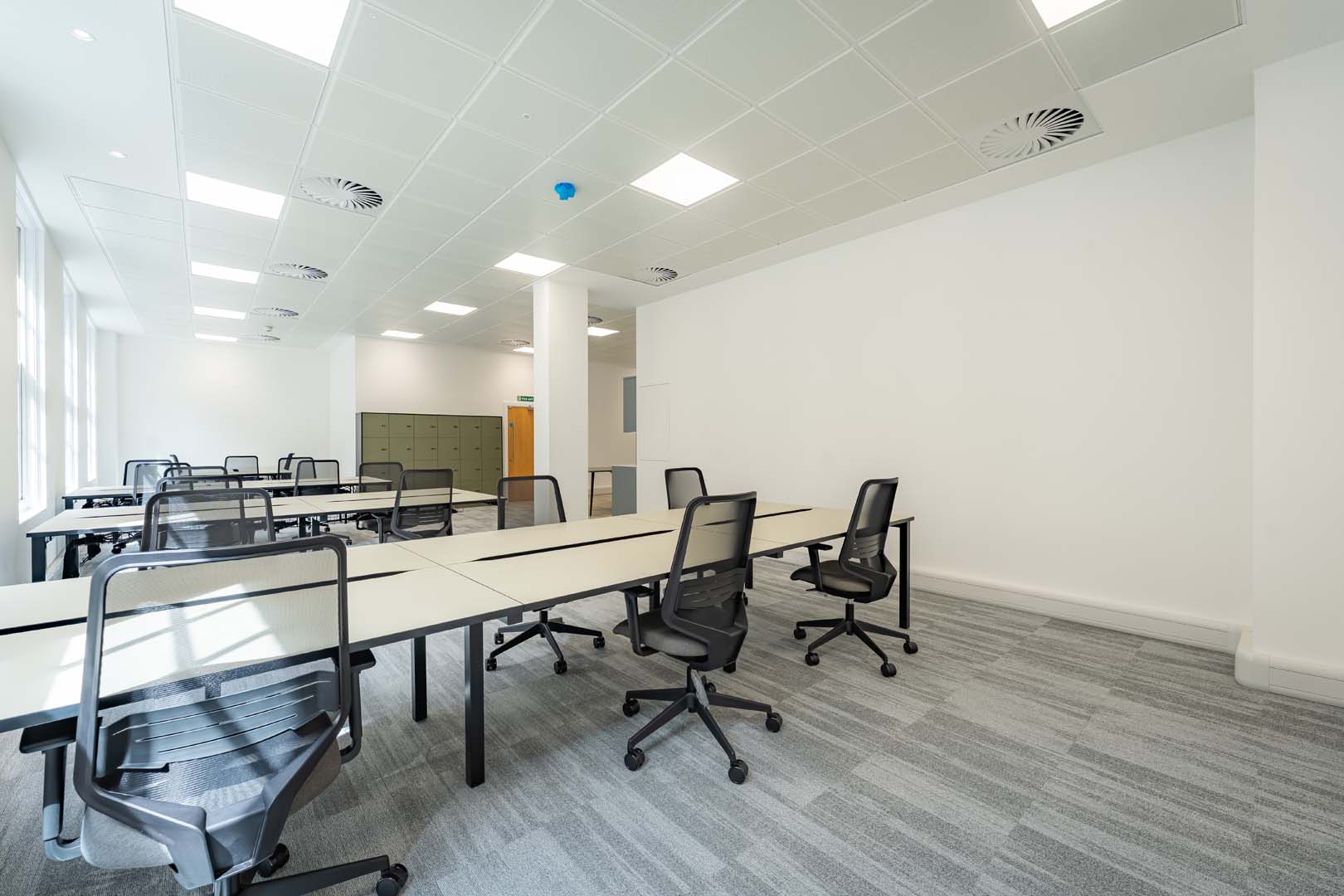
- Use multipurpose furniture: e.g., a long bench desk that could double up as a meeting table; mobile partitions that shift the space from open to semi-private can both be great additions
- Keep circulation paths clear; the floor area is precious.
Utilise Vertical and Hidden Storage
With limited floor space, look upwards and inwards:
- Consider wall-mounted shelving, high storage units, and vertical cabinets to free up floor area.
- Use built-in or bespoke joinery to fit corners and awkward spaces
Choose Scalable Furniture and Flexible Technology
Small office design should anticipate change: growth, hybrid work, and team shifts.
- Consider modular desks, mobile screens, and stackable chairs so you can reconfigure without a full refit.
- Wire-and-tech management matters: hidden cabling, sufficient outlets, and future-proofing reduce the need for disruptive works later.
- Build in hot-desking options if team size fluctuates.
Incorporate Branding and Culture
Even in a small footprint, the design should reflect your company’s brand and support employee experience:
- Use your brand colours, visuals, or textures in subtle ways
- Design a small but comfortable break-out or informal meeting zone, where people can relax or collaborate spontaneously.
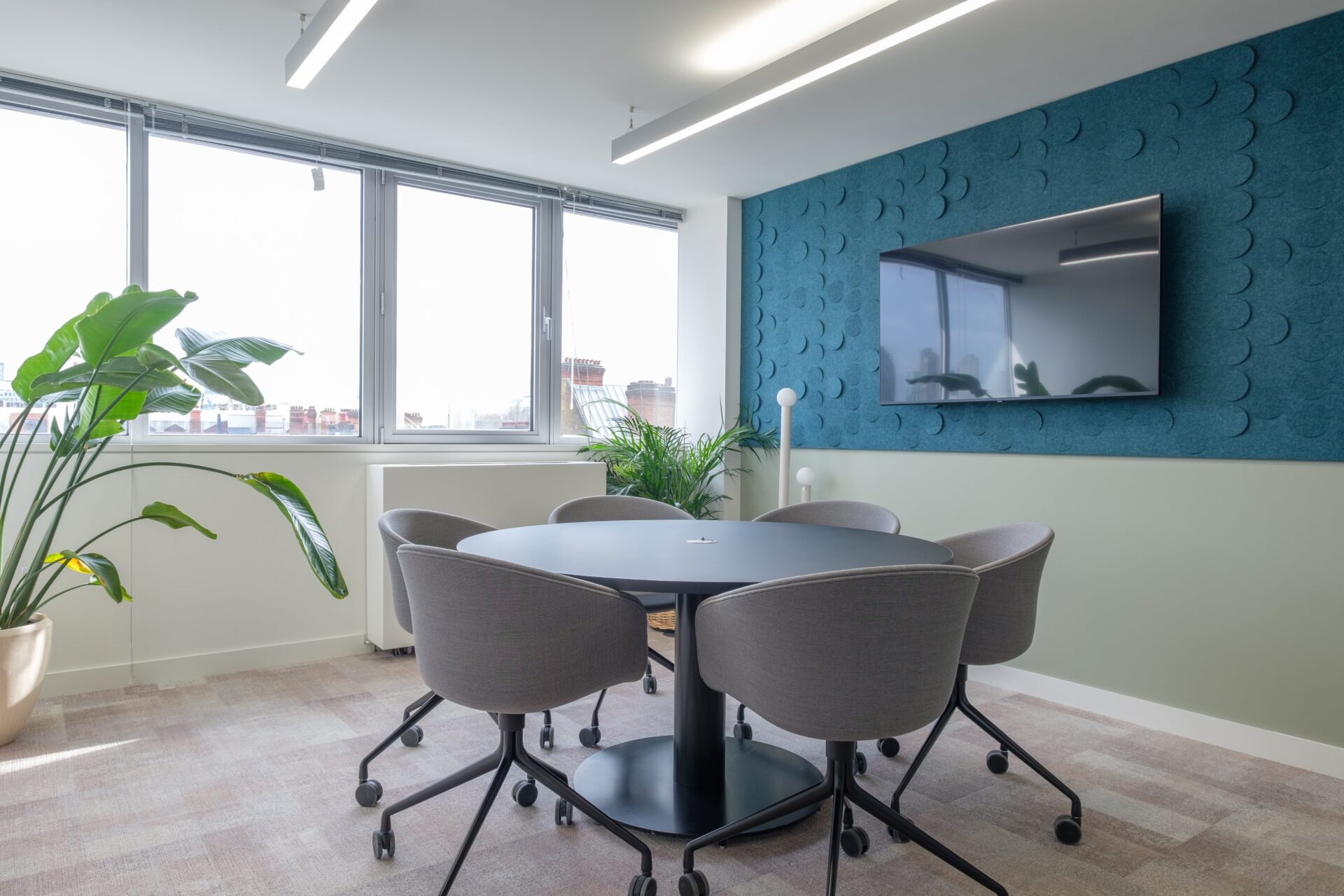
- Integrate elements that make people want to come into the office: good light, fresh materials, comfortable chairs, greenery.
Manage Acoustics and Privacy
Small spaces can be noisy and feel chaotic if not designed with acoustics/privacy in mind:
- Use sound-absorbing materials: acoustic ceiling tiles, wall panels, carpet, or soft furnishings.
- Use mobile or glass partitions for semi-private meeting zones, without losing light or feeling closed in.
Introduce Biophilic Design to Boost Wellbeing and Perception of Space
Bringing elements of nature into the workplace is especially valuable in small offices. Natural features not only support wellbeing and productivity, but also make compact environments feel more spacious and calming.
- A few well-placed plants on shelving, window ledges, or corners can soften harder lines and improve air quality.
- Wood finishes, stone textures, natural fabrics, and warm earth tones can help create a grounding and welcoming atmosphere.
- Keep sightlines clear, avoid blocking windows, and use glass wherever possible to maintain a connection to the outdoors.
Partner with an expert like Imperial for Design, Fit-Out, Compliance, and Delivery
Fit-outs in small offices require precision and care; it’s wise to partner with a company that can handle design, build, compliance, and delivery end-to-end, ideally working with a Director-led team.
Maximising a small office space isn’t about squeezing more desks in; it’s about making every element work smarter, to enhance the space, support the workforce, aim to increase productivity, and future-proof the environment.